Swami Vivekananda Biography
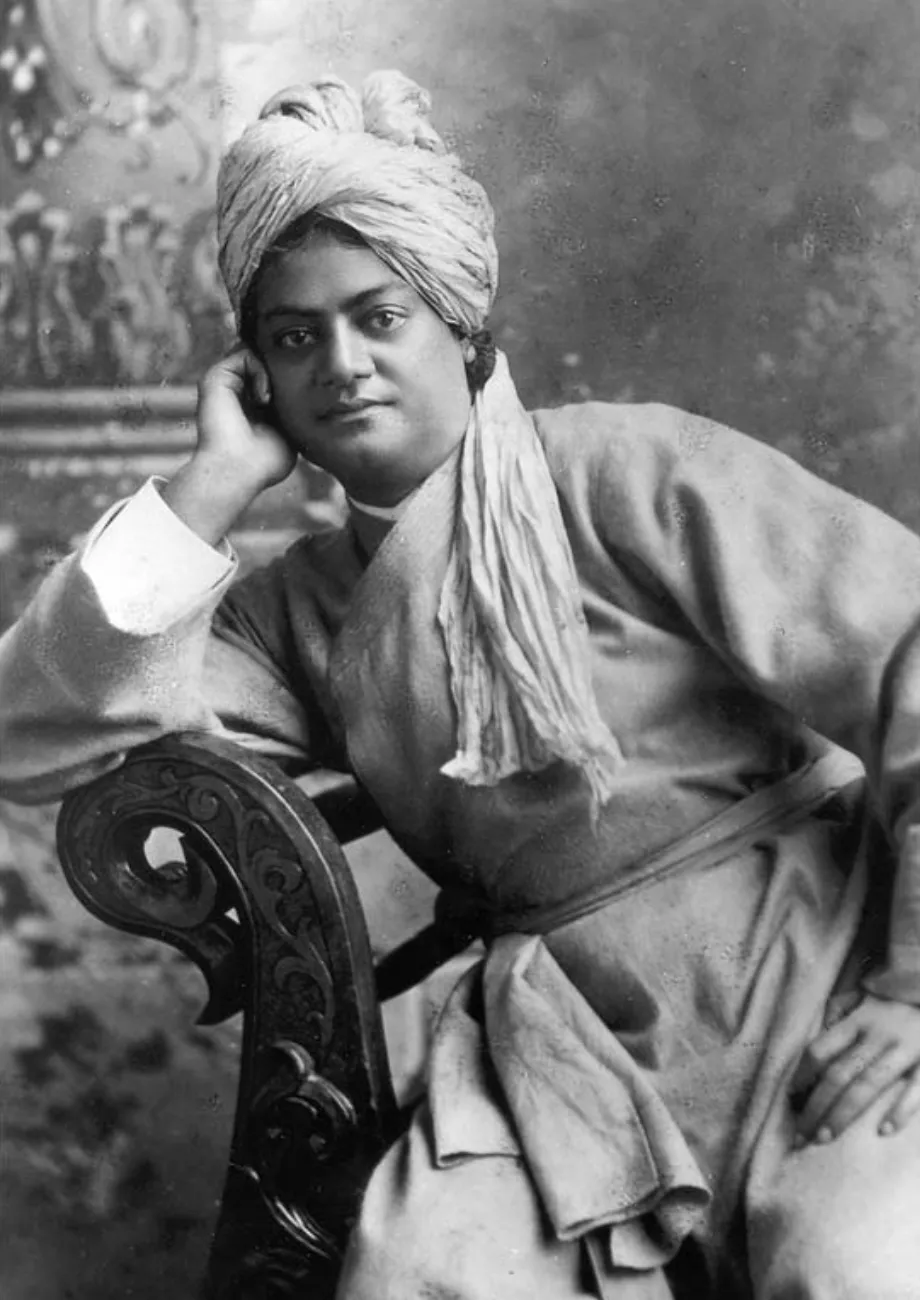
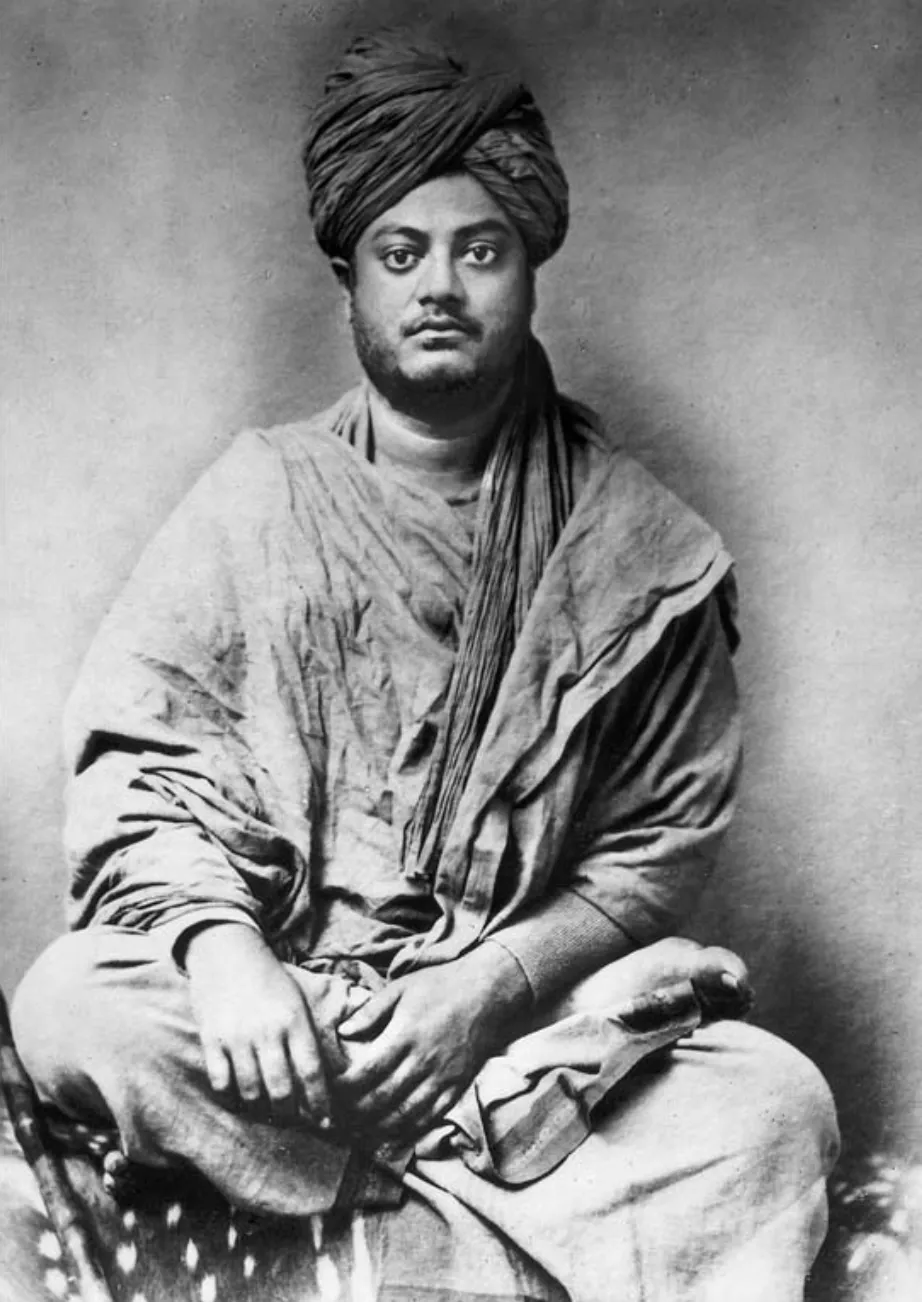
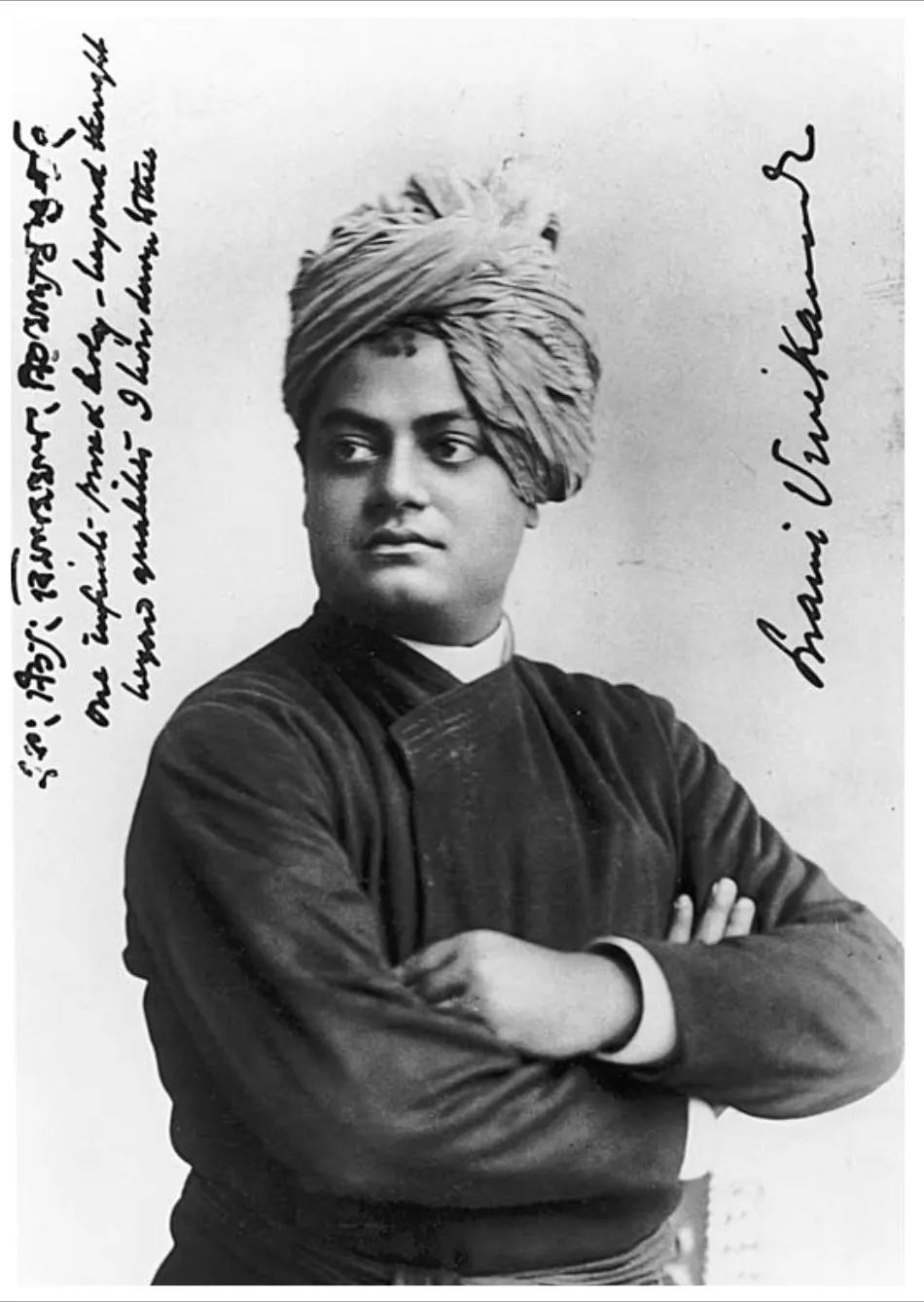
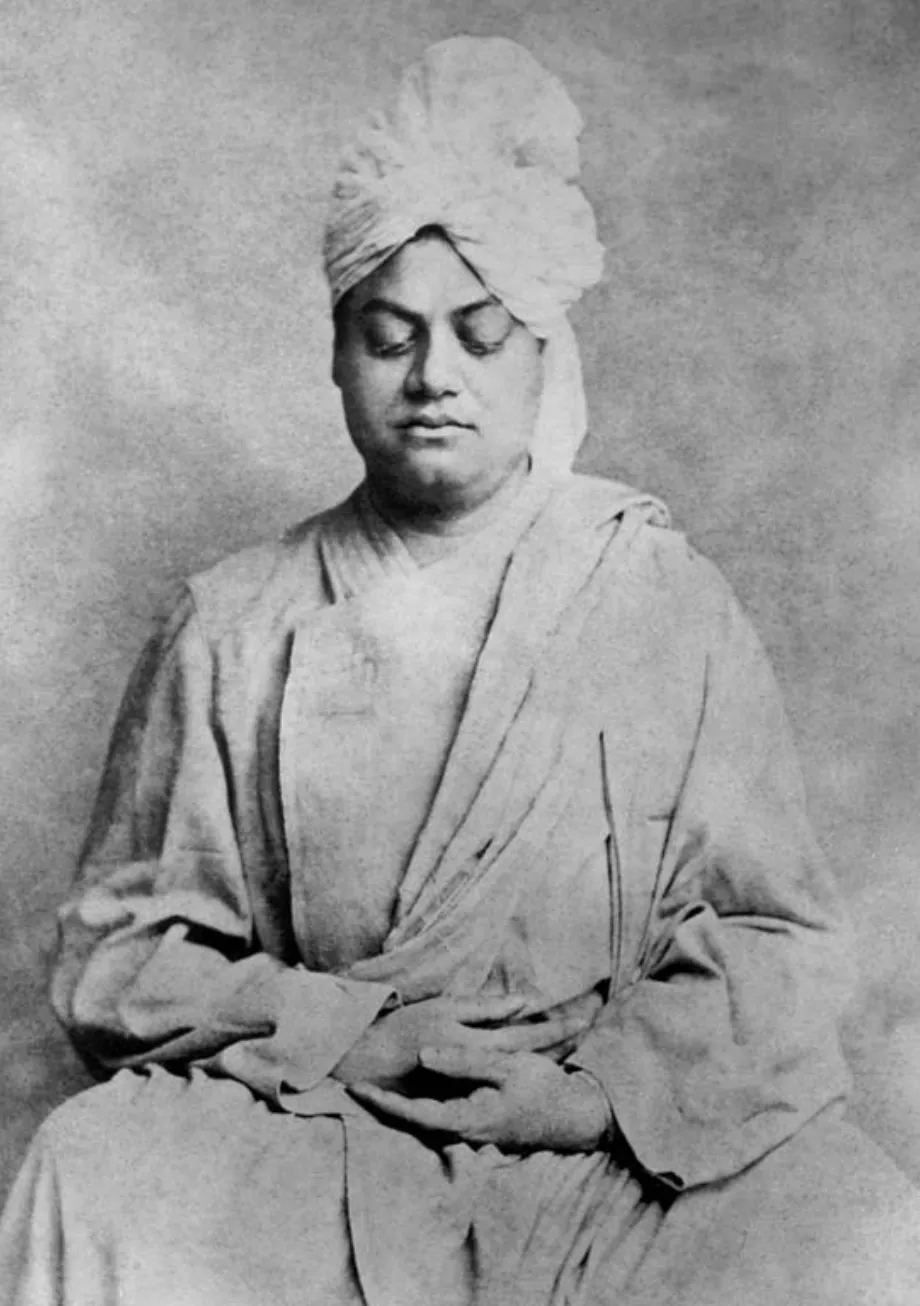
SWAMI VIVEKANANDA WAS BORN Narendranath Datta on January 12, 1863. The Datta family was wealthy and respectable, and renowned for their charity, education, and strong spirit of independence. Naren’s grandfather was well versed in Persian and Sanskrit, and was skilled in law, but after the birth of his son, he renounced the world and became a monk. He was then only twenty-five years of age.
Naren’s father, Vishwanath Datta, was an attorney-at-law in the Calcutta High Court. He was proficient in English and Persian, and took great delight in reciting to his family the poems of the Persian poet Hafiz. He also enjoyed the study of the Bible, and of the Hindu scriptures in Sanskrit. Charitable to an extravagant degree in sympathy for the poor, Vishwanath had a rationalistic as well as progressive outlook in religious and social matters, owing perhaps to the influence of Western culture. Naren’s mother, Bhuvaneshwari Devi, was a deeply religious and accomplished lady, with a regal bearing.
In his early childhood, Naren had a great attraction for spir- itual matters, and would play at worshiping or meditating on the images of Rama-Sita, Shiva, and others. The revered spiritual stories of the Ramayana and the Mahabharata, which his mother taught him, left an indelible impression on his mind. Traits such as courage, sympathy for the poor, and attraction towards wan- dering monks appeared spontaneously in him. Yet even in childhood, Naren demanded convincing arguments for every proposition. With these qualities of head and heart, he grew into a vigorous youth.
As a youth, Naren’s leonine beauty was matched by his courage. He had the build of an athlete, a resonant voice, and a brilliant intellect. He distinguished himself in athletics and music, and among his colleagues he was the undisputed leader. At college he studied and absorbed Western thought, and this implanted a spirit of critical inquiry in his mind. His rational mind and sharp intellect were now at war with his inborn tendency towards spirituality and his respect for ancient religious traditions and beliefs. In this predicament, he tried to find inspiration in the Brahmo Samaj, the popular socio-religious movement of the time. The Brahmo Samaj believed in a formless God, denounced the worship of idols, and addressed itself to various forms of social reform. Naren also met prominent religious leaders, but could not get a convincing answer from them to his questions about the existence of God. This only accentuated his spiritual restlessness.
At this critical juncture, he remembered the words of one of his professors, who had mentioned that a saint lived at Dakshineswar, just outside Calcutta, who had experienced the ecstasy described by Wordsworth in his poem The Excursion. Thus came about, in 1881, the historic meeting of these two great souls; Ramakrishna, the great prophet of modern India, and the future Vivekananda, the carrier of his message. Naren asked, “Sir, have you seen God?” Sri Ramakrishna answered his question in the affirmative, “Yes, I have seen Him just as I see you here, only more intensely.” At last, here was one who could assure him from his own experience that God existed and could be realized. The disciple’s training had begun.
While Sri Ramakrishna tested him in so many ways, Naren in turn tested Sri Ramakrishna in order to ascertain the truth of his spiritual assertions. Gradually, Naren surrendered himself to the Master. And Sri Ramakrishna, with infinite patience, calmed the rebellious spirit of his young disciple, and led him forth from doubt to certainty, and from anguish to spiritual bliss. But, more than Sri Ramakrishna’s spiritual guidance and support, it was his love which conquered young Naren, love which the disciple reciprocated in full measure.
With Sri Ramakrishna’s illness in 1885 came his removal from Dakshineswar to Cossipore for treatment; and so began Naren’s final training under his Guru. It was a time remarkable for the intense spiritual fire which burned within him, and which expressed itself through various intense practices. Ramakrishna utilized the opportunity to bring his young disciples under the leadership of Naren. Three or four days before his passing, Sri Ramakrishna transmitted to Naren his own power, and told him, “By the force of the power transmitted by me, great things will be done by you.”
After the passing away of the Master in August 1886, many of the young disciples gathered together in an old dilapidated house at Baranagore, under the leadership of Naren. Here, in the midst of a life of intense austerity and spiritual practices, the foundation of the Ramakrishna brotherhood was laid. It was during these days that Naren, along with many of his brother disciples, took the vow of sannyasa, renunciation. The days at Baranagore were full of great joy, study, and spiritual practices. But the call of the wandering life of the sannyasin was now felt by most of the monks. And Naren, too, towards the close of 1888, began to take temporary excursions away from the monastery.
The Wandering Monk
A remarkable change of outlook came over Naren between the end of 1888, when he first left on his temporary excursions, and 1890, when he parted from his brethren and traveled alone as an unknown mendicant. He began to assume various names in order to conceal his identity, that he might be swallowed up in the immensity of India.
Now the natural desire of an Indian monk for a life of solitude gave way to the understanding that he was to fulfil a great destiny; that his was not the life of an ordinary monk struggling for personal salvation. In July 1890, under the influence of his burning desire to know India better and the appeal rising all around him from oppressed India, the Swami took leave of his brother monks with the firm resolve to cut himself free from all ties and to go into the solitude of the Himalayas. In the words of Romain Rolland, “This was the great departure. Like a diver he plunged into the Ocean of India and the Ocean of India covered his tracks.” Among its countless people he was nothing more than one name- less monk in saffron robe among a thousand others. But the fires of genius burned in his eyes. He was a prince despite all disguise.
His wanderings took him to various places of pilgrimage and historical interest. Everywhere he went, the glory of ancient India vividly came before his eyes, whether political, cultural, or spiritual. In the midst of this great education, the abject misery of the Indian masses stood out before his mind. He moved from one princely State to another, everywhere trying to find ways to relieve the suffering of the poor. Thus he came to meet many leading personalities and rulers of the princely States. Among them was the Maharaja of Mysore, who gave him the financial support necessary to travel to the West to seek help for India, and to preach the eternal religion to the modern world.
Wherever he went, the terrible poverty and misery of the masses caused his soul to burn in agony. He had traveled through the whole of India, often on foot, for nearly three years, coming to know India first hand. Now he had reached the southern tip of India. The vast panorama of his experiences during his travels passed before his mind’s eye. He meditated on the past, the present, and the future of India, on the causes of her downfall, and the means of her resurrection. He then made the momentous decision to go to the West to seek help for the poor of India, and thus gave shape to his life’s mission.
With this decision, he journeyed on to Madras, where a group of young men were eagerly awaiting his arrival. To them he revealed his intention of visiting America to attend the Parliament of Religions that was being convened at Chicago. His young disciples forthwith raised a subscription for his passage. At this juncture, the Swami had a symbolic vision in which Sri Rama- krishna walked out into the sea and beckoned him to follow. This, coupled with the blessings of Sri Ramakrishna’s holy consort, Sri Sarada Devi, settled the question for him. His journey to America commenced on May 31, 1893.
On the World Stage
Swami Vivekananda traveled to America at the young age of thirty, reaching Chicago in July of 1893. To his disappointment, he learned that the Parliament of Religions would not be held until September, and, worse, that no one could be a delegate with- out credentials! Resigning himself to the will of Providence, he went to Boston, where he was told it was less expensive to stay. On the train to Boston, he happened to become acquainted with Miss Katherine Sanborn, who invited him to be her guest in Boston. Through her he came to know Professor John Henry Wright of Harvard University, who gave him a letter of introduction to the Chairman of the Parliament of Religions. In the course of this letter, Dr. Wright said, “Here is a man who is more learned than all our learned professors put together.”
The Swami returned to Chicago a couple of days before the opening of the Parliament of Religions, but found to his dismay that he had lost the address of the committee that was providing hospitality for the Oriental delegates. After a night’s rest in a box- car in the railway freight yard, the Swami set out in the morning to find somebody who could help him out of this difficulty. But help for a dark-skinned Indian man in 1893 America was not readily available. Exhausted by a fruitless search, he sat down on the roadside, resigning himself once again to the divine will. Suddenly, a lady of regal appearance emerged from a fashionable house across the street, approached him, and offered him help. This was Mrs. George W. Hale, whose house was to become the permanent address of the Swami while in the United States, for the Hale family became his devoted followers.
The Parliament of Religions opened in September of 1893. The spacious hall of the Art Institute was packed with thousands of people representing the best culture of the country. On the platform every organized religion from all corners of the world had its representative. The Swami had never addressed such a huge and distinguished gathering. When his turn came, he mentally bowed down to Sarasvati, the goddess of learning, and then began his address with the words, “Sisters and Brothers of America.” Immediately there was thunderous applause from the vast audience, and it lasted for a full two minutes. The appeal of his simple words of burning sincerity, his great personality, and his bright countenance were so great that the next day the newspapers described him as the greatest figure in the Parliament of Religions. The simple monk with a begging bowl had become the man of the hour.
All the subsequent speeches of the Swami at the Parliament were listened to with great respect and appreciation. They all had one common theme — universality. While all the delegates to the Parliament spoke of their own religion, the Swami spoke of a religion that was vast as the sky and deep as the ocean.
When the Parliament ended, the days of quiet had ended for the Swami. What followed were days of hectic lecturing in almost every part of the United States. Having signed a contract for a lecture tour with a bureau, the Swami had to be constantly on the move, speaking to all sorts of audiences. He lectured in most of the larger cities of the eastern, midwestern, and southern states, including Chicago, Iowa City, Des Moines, Memphis, Indianapolis, Minneapolis, Madison, Detroit, Hartford, Buffalo, Boston, Cambridge, Baltimore, Washington, Brooklyn, and New York.
Swami used the lecture tour to acquire funds in order to help relieve the suffering and poverty in India, as well as to bring to the West the ancient Indian wisdom of Vedanta and practices of Classical Yoga. He had decided to earn money for India only through his own labor, without appealing publicly for contributions. Of course, as a renunciate and monk, not a penny ever went to Vivekananda himself.
This first stay in America, which was to last more than three years, was packed with intense activity. Though the lecture tour provided him with opportunities of knowing the different aspects of Western life first hand, he wanted to form a group of earnest American disciples, and so he eventually left the lecture bureau and began classes, free of charge, for sincere students. Besides giving numerous lectures and classes in New York during this time, he founded the first Vedanta Society in America there. He also trained a group of close disciples at Thousand Island Park, wrote Raja Yoga, and paid two successful visits to England, where he gave the lectures which now form Jnana Yoga. The results of his work produced such an impression that he was offered the Chair of Eastern Philosophy at both Harvard University and Columbia University.
He had labored hard to give to the West his message of Vedanta as the universal principle basic to all religions, and his efforts had by now resulted in the establishment of the first center for Yoga work on a permanent basis in the United States. But his motherland was calling him, eager to receive his message, and so, at the end of 1896, he returned to India. Besides his American disciples, he left behind his brother disciples Saradananda and Abhedananda to carry on the work.
Triumphal Return
Swami Vivekananda left for India in December of 1896. The news of the Swami’s return had already reached India, and people everywhere throughout the country were afire with enthusiasm to receive him. At Madras he delivered public lectures, every one of which was a clarion call to rise to build a new India. He emphasized that in India, “the keynote of the whole music of the national life” was religion, a religion which preached the “spiritual oneness of the whole universe,” and that when that religion was strengthened, everything else would take care of itself. He did not spare his criticism, however, castigating his countrymen for their blind adherence to old superstitions, for their caste prejudices, and so on.
From Madras the Swami traveled to Calcutta, and arrived there in February of 1897. His native city gave him a grand welcome, and here the Swami paid a touching tribute to his Master, Paramahamsa Ramakrishna:
"If there has been anything achieved by me, if from my lips has ever fallen one word that has helped anyone in the world, I lay no claim to it; it was his. If this nation wants to rise, take my word for it, it will have to rally around his name."
To establish Ramakrishna’s work on a firm basis, Vivekananda, along with all the monastic and lay disciples, formed the Ramakrishna Mission in May of 1897. The aims and ideals of the Mission propounded by the Swami were purely spiritual and humanitarian. He had inaugurated the machinery for carrying out his ideas.
In January 1899, the monks moved to a new monastery, the now famous Belur Math. The Nivedita Girls’ School had been inaugurated earlier. The Bengali monthly Udbodhan was also started at this time. And the Seviers, two of Vivekananda’s Western disciples, fulfilled the Swami’s dream of having a monastery in the Himalayas by starting the Advaita Ashrama at Mayavati, Pithoragarh, in March 1899.
During this period, the Swami constantly inspired the sannyasins and brahmacharins at the Math towards a life of intense spirituality and service, for one’s own emancipation and the good of one’s fellow men — Atmano mokshartham jagadhitaya cha, as he put it. But the Swami’s health was failing. So his plan to revisit the West was welcomed by his brother monks in the hope that this would improve his health.
Across the World Again
Swami Vivekananda left India in June of 1899. After spending two weeks in London, he sailed for New York. Arriving there, he stayed at Ridgely Manor, on the Hudson River, until November, when he went to the West Coast.
The Swami traveled and lectured extensively on the West Coast until June of 1900. He compensated, as it were, for his omission of the West Coast during his earlier visit. His work during this period was of a tremendous magnitude and significance. Some of his most famous lectures were delivered during this period. Great enthusiasm was created in the cities of Los Angeles, San Francisco, Pasadena, Alameda, and Oakland. The Swami’s health had improved after the sea-voyage, and once again he poured out his soul in giving his great message to the American people.
Now the conviction that the East and the West ought to be mutually helpful and cooperate with each other grew stronger within him. The mere material brilliance of the West could not dazzle him, nor could the emphasis on spirituality in India hide her social and economic drawbacks. Now East and West must work hand in hand for the good of each other, without destroying the special characteristics of each. The West has much to learn from the East, and the East has much to learn from the West: in fact, the future has to be shaped by a proper fusion of the two ideals. Then there will be neither East nor West, but one humanity.
During this time, Swami founded the Vedanta Center of San Francisco, and the Shanti Ashrama in Northern California was opened. In spite of tremendous activity, the Swami was becoming more and more aware of the approaching end. In April of 1900, he wrote to one of his disciples: “My boat is nearing the calm harbor from which it is never more to be driven out.”
In August of 1900, he arrived in Paris to participate in the Congress of the History of Religions. He left Paris in October, and went on to visit Hungary, Rumania, Serbia, Bulgaria, Constantinople, Athens, and Cairo. In Cairo, the Swami suddenly became restless to return home. He took the first available boat to India, and reached the Belur Math in December of 1900. It was a surprise to his brother monks and disciples, who greatly rejoiced at his return.
The Journey’s End
Returning to Belur Math, the Swami tried to lead a carefree life at the monastery. He would roam about the Math grounds, sometimes clad only in his loincloth; or he would supervise the cooking; or he would sit with the monks singing devotional songs. Sometimes he would be seen imparting spiritual instruction to visitors, at other times engaged in serious study in his room or explaining to the members of the Math the intricate passages of the scriptures.
Towards the end of 1901, he went to Varanasi, where he was delighted to see how some young men, inspired by his call to service, had started nursing the poor and the needy. Their work formed the nucleus of the future Ramakrishna Mission Home of Service.
The Swami knew his end was nearing. All his actions during the last days were deliberate. He said that smaller plants cannot grow under the shade of a big tree. On July 4, 1902, he meditated from 8 to 11 in the morning. In the afternoon, he went out for a walk, and in the evening, he retired to his room and spent an hour in meditation. Then he lay down quietly, and, after some time, took two deep breaths and passed into eternal rest. His followers lived to see the truth of the words he uttered not long before about his future: “It may be that I shall find it good to get outside my body — to cast it off like a worn-out garment. But I shall not cease to work. I shall inspire men everywhere, until the world shall know that it is one with God.”
(From Vivekananda: A Biography in Pictures.)
SWAMI VIVEKANANDA WAS BORN Narendranath Datta on January 12, 1863. The Datta family was wealthy and respectable, and renowned for their charity, education, and strong spirit of independence. Naren’s grandfather was well versed in Persian and Sanskrit, and was skilled in law, but after the birth of his son, he renounced the world and became a monk. He was then only twenty-five years of age.
Naren’s father, Vishwanath Datta, was an attorney-at-law in the Calcutta High Court. He was proficient in English and Persian, and took great delight in reciting to his family the poems of the Persian poet Hafiz. He also enjoyed the study of the Bible, and of the Hindu scriptures in Sanskrit. Charitable to an extravagant degree in sympathy for the poor, Vishwanath had a rationalistic as well as progressive outlook in religious and social matters, owing perhaps to the influence of Western culture. Naren’s mother, Bhuvaneshwari Devi, was a deeply religious and accomplished lady, with a regal bearing.
In his early childhood, Naren had a great attraction for spir- itual matters, and would play at worshiping or meditating on the images of Rama-Sita, Shiva, and others. The revered spiritual stories of the Ramayana and the Mahabharata, which his mother taught him, left an indelible impression on his mind. Traits such as courage, sympathy for the poor, and attraction towards wan- dering monks appeared spontaneously in him. Yet even in childhood, Naren demanded convincing arguments for every proposition. With these qualities of head and heart, he grew into a vigorous youth.
As a youth, Naren’s leonine beauty was matched by his courage. He had the build of an athlete, a resonant voice, and a brilliant intellect. He distinguished himself in athletics and music, and among his colleagues he was the undisputed leader. At college he studied and absorbed Western thought, and this implanted a spirit of critical inquiry in his mind. His rational mind and sharp intellect were now at war with his inborn tendency towards spirituality and his respect for ancient religious traditions and beliefs. In this predicament, he tried to find inspiration in the Brahmo Samaj, the popular socio-religious movement of the time. The Brahmo Samaj believed in a formless God, denounced the worship of idols, and addressed itself to various forms of social reform. Naren also met prominent religious leaders, but could not get a convincing answer from them to his questions about the existence of God. This only accentuated his spiritual restlessness.
At this critical juncture, he remembered the words of one of his professors, who had mentioned that a saint lived at Dakshineswar, just outside Calcutta, who had experienced the ecstasy described by Wordsworth in his poem The Excursion. Thus came about, in 1881, the historic meeting of these two great souls; Ramakrishna, the great prophet of modern India, and the future Vivekananda, the carrier of his message. Naren asked, “Sir, have you seen God?” Sri Ramakrishna answered his question in the affirmative, “Yes, I have seen Him just as I see you here, only more intensely.” At last, here was one who could assure him from his own experience that God existed and could be realized. The disciple’s training had begun.
While Sri Ramakrishna tested him in so many ways, Naren in turn tested Sri Ramakrishna in order to ascertain the truth of his spiritual assertions. Gradually, Naren surrendered himself to the Master. And Sri Ramakrishna, with infinite patience, calmed the rebellious spirit of his young disciple, and led him forth from doubt to certainty, and from anguish to spiritual bliss. But, more than Sri Ramakrishna’s spiritual guidance and support, it was his love which conquered young Naren, love which the disciple reciprocated in full measure.
With Sri Ramakrishna’s illness in 1885 came his removal from Dakshineswar to Cossipore for treatment; and so began Naren’s final training under his Guru. It was a time remarkable for the intense spiritual fire which burned within him, and which expressed itself through various intense practices. Ramakrishna utilized the opportunity to bring his young disciples under the leadership of Naren. Three or four days before his passing, Sri Ramakrishna transmitted to Naren his own power, and told him, “By the force of the power transmitted by me, great things will be done by you.”
After the passing away of the Master in August 1886, many of the young disciples gathered together in an old dilapidated house at Baranagore, under the leadership of Naren. Here, in the midst of a life of intense austerity and spiritual practices, the foundation of the Ramakrishna brotherhood was laid. It was during these days that Naren, along with many of his brother disciples, took the vow of sannyasa, renunciation. The days at Baranagore were full of great joy, study, and spiritual practices. But the call of the wandering life of the sannyasin was now felt by most of the monks. And Naren, too, towards the close of 1888, began to take temporary excursions away from the monastery.
The Wandering Monk
A remarkable change of outlook came over Naren between the end of 1888, when he first left on his temporary excursions, and 1890, when he parted from his brethren and traveled alone as an unknown mendicant. He began to assume various names in order to conceal his identity, that he might be swallowed up in the immensity of India.
Now the natural desire of an Indian monk for a life of solitude gave way to the understanding that he was to fulfil a great destiny; that his was not the life of an ordinary monk struggling for personal salvation. In July 1890, under the influence of his burning desire to know India better and the appeal rising all around him from oppressed India, the Swami took leave of his brother monks with the firm resolve to cut himself free from all ties and to go into the solitude of the Himalayas. In the words of Romain Rolland, “This was the great departure. Like a diver he plunged into the Ocean of India and the Ocean of India covered his tracks.” Among its countless people he was nothing more than one name- less monk in saffron robe among a thousand others. But the fires of genius burned in his eyes. He was a prince despite all disguise.
His wanderings took him to various places of pilgrimage and historical interest. Everywhere he went, the glory of ancient India vividly came before his eyes, whether political, cultural, or spiritual. In the midst of this great education, the abject misery of the Indian masses stood out before his mind. He moved from one princely State to another, everywhere trying to find ways to relieve the suffering of the poor. Thus he came to meet many leading personalities and rulers of the princely States. Among them was the Maharaja of Mysore, who gave him the financial support necessary to travel to the West to seek help for India, and to preach the eternal religion to the modern world.
Wherever he went, the terrible poverty and misery of the masses caused his soul to burn in agony. He had traveled through the whole of India, often on foot, for nearly three years, coming to know India first hand. Now he had reached the southern tip of India. The vast panorama of his experiences during his travels passed before his mind’s eye. He meditated on the past, the present, and the future of India, on the causes of her downfall, and the means of her resurrection. He then made the momentous decision to go to the West to seek help for the poor of India, and thus gave shape to his life’s mission.
With this decision, he journeyed on to Madras, where a group of young men were eagerly awaiting his arrival. To them he revealed his intention of visiting America to attend the Parliament of Religions that was being convened at Chicago. His young disciples forthwith raised a subscription for his passage. At this juncture, the Swami had a symbolic vision in which Sri Rama- krishna walked out into the sea and beckoned him to follow. This, coupled with the blessings of Sri Ramakrishna’s holy consort, Sri Sarada Devi, settled the question for him. His journey to America commenced on May 31, 1893.
On the World Stage
Swami Vivekananda traveled to America at the young age of thirty, reaching Chicago in July of 1893. To his disappointment, he learned that the Parliament of Religions would not be held until September, and, worse, that no one could be a delegate with- out credentials! Resigning himself to the will of Providence, he went to Boston, where he was told it was less expensive to stay. On the train to Boston, he happened to become acquainted with Miss Katherine Sanborn, who invited him to be her guest in Boston. Through her he came to know Professor John Henry Wright of Harvard University, who gave him a letter of introduction to the Chairman of the Parliament of Religions. In the course of this letter, Dr. Wright said, “Here is a man who is more learned than all our learned professors put together.”
The Swami returned to Chicago a couple of days before the opening of the Parliament of Religions, but found to his dismay that he had lost the address of the committee that was providing hospitality for the Oriental delegates. After a night’s rest in a box- car in the railway freight yard, the Swami set out in the morning to find somebody who could help him out of this difficulty. But help for a dark-skinned Indian man in 1893 America was not readily available. Exhausted by a fruitless search, he sat down on the roadside, resigning himself once again to the divine will. Suddenly, a lady of regal appearance emerged from a fashionable house across the street, approached him, and offered him help. This was Mrs. George W. Hale, whose house was to become the permanent address of the Swami while in the United States, for the Hale family became his devoted followers.
The Parliament of Religions opened in September of 1893. The spacious hall of the Art Institute was packed with thousands of people representing the best culture of the country. On the platform every organized religion from all corners of the world had its representative. The Swami had never addressed such a huge and distinguished gathering. When his turn came, he mentally bowed down to Sarasvati, the goddess of learning, and then began his address with the words, “Sisters and Brothers of America.” Immediately there was thunderous applause from the vast audience, and it lasted for a full two minutes. The appeal of his simple words of burning sincerity, his great personality, and his bright countenance were so great that the next day the newspapers described him as the greatest figure in the Parliament of Religions. The simple monk with a begging bowl had become the man of the hour.
All the subsequent speeches of the Swami at the Parliament were listened to with great respect and appreciation. They all had one common theme — universality. While all the delegates to the Parliament spoke of their own religion, the Swami spoke of a religion that was vast as the sky and deep as the ocean.
When the Parliament ended, the days of quiet had ended for the Swami. What followed were days of hectic lecturing in almost every part of the United States. Having signed a contract for a lecture tour with a bureau, the Swami had to be constantly on the move, speaking to all sorts of audiences. He lectured in most of the larger cities of the eastern, midwestern, and southern states, including Chicago, Iowa City, Des Moines, Memphis, Indianapolis, Minneapolis, Madison, Detroit, Hartford, Buffalo, Boston, Cambridge, Baltimore, Washington, Brooklyn, and New York.
Swami used the lecture tour to acquire funds in order to help relieve the suffering and poverty in India, as well as to bring to the West the ancient Indian wisdom of Vedanta and practices of Classical Yoga. He had decided to earn money for India only through his own labor, without appealing publicly for contributions. Of course, as a renunciate and monk, not a penny ever went to Vivekananda himself.
This first stay in America, which was to last more than three years, was packed with intense activity. Though the lecture tour provided him with opportunities of knowing the different aspects of Western life first hand, he wanted to form a group of earnest American disciples, and so he eventually left the lecture bureau and began classes, free of charge, for sincere students. Besides giving numerous lectures and classes in New York during this time, he founded the first Vedanta Society in America there. He also trained a group of close disciples at Thousand Island Park, wrote Raja Yoga, and paid two successful visits to England, where he gave the lectures which now form Jnana Yoga. The results of his work produced such an impression that he was offered the Chair of Eastern Philosophy at both Harvard University and Columbia University.
He had labored hard to give to the West his message of Vedanta as the universal principle basic to all religions, and his efforts had by now resulted in the establishment of the first center for Yoga work on a permanent basis in the United States. But his motherland was calling him, eager to receive his message, and so, at the end of 1896, he returned to India. Besides his American disciples, he left behind his brother disciples Saradananda and Abhedananda to carry on the work.
Triumphal Return
Swami Vivekananda left for India in December of 1896. The news of the Swami’s return had already reached India, and people everywhere throughout the country were afire with enthusiasm to receive him. At Madras he delivered public lectures, every one of which was a clarion call to rise to build a new India. He emphasized that in India, “the keynote of the whole music of the national life” was religion, a religion which preached the “spiritual oneness of the whole universe,” and that when that religion was strengthened, everything else would take care of itself. He did not spare his criticism, however, castigating his countrymen for their blind adherence to old superstitions, for their caste prejudices, and so on.
From Madras the Swami traveled to Calcutta, and arrived there in February of 1897. His native city gave him a grand welcome, and here the Swami paid a touching tribute to his Master, Paramahamsa Ramakrishna:
"If there has been anything achieved by me, if from my lips has ever fallen one word that has helped anyone in the world, I lay no claim to it; it was his. If this nation wants to rise, take my word for it, it will have to rally around his name."
To establish Ramakrishna’s work on a firm basis, Vivekananda, along with all the monastic and lay disciples, formed the Ramakrishna Mission in May of 1897. The aims and ideals of the Mission propounded by the Swami were purely spiritual and humanitarian. He had inaugurated the machinery for carrying out his ideas.
In January 1899, the monks moved to a new monastery, the now famous Belur Math. The Nivedita Girls’ School had been inaugurated earlier. The Bengali monthly Udbodhan was also started at this time. And the Seviers, two of Vivekananda’s Western disciples, fulfilled the Swami’s dream of having a monastery in the Himalayas by starting the Advaita Ashrama at Mayavati, Pithoragarh, in March 1899.
During this period, the Swami constantly inspired the sannyasins and brahmacharins at the Math towards a life of intense spirituality and service, for one’s own emancipation and the good of one’s fellow men — Atmano mokshartham jagadhitaya cha, as he put it. But the Swami’s health was failing. So his plan to revisit the West was welcomed by his brother monks in the hope that this would improve his health.
Across the World Again
Swami Vivekananda left India in June of 1899. After spending two weeks in London, he sailed for New York. Arriving there, he stayed at Ridgely Manor, on the Hudson River, until November, when he went to the West Coast.
The Swami traveled and lectured extensively on the West Coast until June of 1900. He compensated, as it were, for his omission of the West Coast during his earlier visit. His work during this period was of a tremendous magnitude and significance. Some of his most famous lectures were delivered during this period. Great enthusiasm was created in the cities of Los Angeles, San Francisco, Pasadena, Alameda, and Oakland. The Swami’s health had improved after the sea-voyage, and once again he poured out his soul in giving his great message to the American people.
Now the conviction that the East and the West ought to be mutually helpful and cooperate with each other grew stronger within him. The mere material brilliance of the West could not dazzle him, nor could the emphasis on spirituality in India hide her social and economic drawbacks. Now East and West must work hand in hand for the good of each other, without destroying the special characteristics of each. The West has much to learn from the East, and the East has much to learn from the West: in fact, the future has to be shaped by a proper fusion of the two ideals. Then there will be neither East nor West, but one humanity.
During this time, Swami founded the Vedanta Center of San Francisco, and the Shanti Ashrama in Northern California was opened. In spite of tremendous activity, the Swami was becoming more and more aware of the approaching end. In April of 1900, he wrote to one of his disciples: “My boat is nearing the calm harbor from which it is never more to be driven out.”
In August of 1900, he arrived in Paris to participate in the Congress of the History of Religions. He left Paris in October, and went on to visit Hungary, Rumania, Serbia, Bulgaria, Constantinople, Athens, and Cairo. In Cairo, the Swami suddenly became restless to return home. He took the first available boat to India, and reached the Belur Math in December of 1900. It was a surprise to his brother monks and disciples, who greatly rejoiced at his return.
The Journey’s End
Returning to Belur Math, the Swami tried to lead a carefree life at the monastery. He would roam about the Math grounds, sometimes clad only in his loincloth; or he would supervise the cooking; or he would sit with the monks singing devotional songs. Sometimes he would be seen imparting spiritual instruction to visitors, at other times engaged in serious study in his room or explaining to the members of the Math the intricate passages of the scriptures.
Towards the end of 1901, he went to Varanasi, where he was delighted to see how some young men, inspired by his call to service, had started nursing the poor and the needy. Their work formed the nucleus of the future Ramakrishna Mission Home of Service.
The Swami knew his end was nearing. All his actions during the last days were deliberate. He said that smaller plants cannot grow under the shade of a big tree. On July 4, 1902, he meditated from 8 to 11 in the morning. In the afternoon, he went out for a walk, and in the evening, he retired to his room and spent an hour in meditation. Then he lay down quietly, and, after some time, took two deep breaths and passed into eternal rest. His followers lived to see the truth of the words he uttered not long before about his future: “It may be that I shall find it good to get outside my body — to cast it off like a worn-out garment. But I shall not cease to work. I shall inspire men everywhere, until the world shall know that it is one with God.”
(From Vivekananda: A Biography in Pictures.)
THE WORLD’S FIRST PARLIAMENT of Religions, which was held in the city of Chicago from September 11 to 27, 1893, was one of the great epoch-making events in the history of religions, especially in regards to Hinduism. Delegates came from all parts of the world, representing every form of organized religious belief. It was not only a Parliament of Religions; it was a parliament of humanity; and if this great assembly of religious ideas and creeds had done nothing more than make society aware of the “Unity in diversity” of the religious outlook of man, it would still have been unequaled among ecumenical conventions in character and importance. But it did far more than that. It roused a wave of new awareness in the Western world of the profundity and vitality of Eastern thought.
News that the Parliament was to be held was heralded to all parts of the globe. Committees of various kinds were formed to organize it on a proper basis, and invitations were sent out to the heads or executive bodies of religious organizations the world over. Every religious creed was to send its own delegate or delegates, as the case might be, and reception committees were to receive them on their arrival in Chicago.
During the seventeen days of the Parliament proper, there assembled a great concourse of humanity, which included many of the most distinguished people of the world. Many of the greatest minds of the West were in daily attendance, and among the delegates were high ecclesiastics of various faiths.
The main sessions of the Parliament were held morning, afternoon, and evening in the large Hall of Columbus. Generally, the Hall of Columbus was full to overflowing; indeed, at times the overflow was so great that it nearly filled the adjoining twin Hall of Washington, where the speakers repeated their lectures to a second vast audience. Hundreds of papers and addresses were delivered during the main sessions. In addition, many talks were given before the thirty-five denominational congresses and auxiliary sections which were held either in the Hall of Washington or in the smaller halls of the building.
Swami Vivekananda himself described the opening of the Parliament and his own state of mind in replying to the welcome offered to the delegates:
"On the morning of the opening of the Parliament, we all assembled in a building called the Art Palace, where one huge, and other smaller temporary halls were erected for the sittings of the Parliament. People from all nations were there. There was a grand procession, and we were all marshaled onto the platform. Imagine a hall below and a huge gallery above, packed with six or seven thousand men and women representing the best culture of the country, and on the platform learned men of all nations on the earth. And I who never spoke in public in my life to address this august assemblage!
Indeed, that sea of faces might have given even a practiced orator stage fright. To speak before such a distinguished, critical, and highly intellectual gathering required intense self-confidence. The Swami had walked in the imposing procession of delegates, and had seen the huge assembly, the eager faces of the audience, and the authoritative and dignified princes of the Christian churches who sat on the platform. He was lost in amazement by the splendor of it all.
He himself was alternately rapt in silent prayer and stirred by the eloquence of the speakers who had preceded him. Several times he had been called upon to speak, but he had said, “No, not now,” until the Chairman was puzzled and wondered if he would speak at all. At length, in the late afternoon, the Chairman insisted, and the Swami arose.
His face glowed like fire. His eyes surveyed in a sweep the huge assembly before him. The whole audience grew intent; a pin could have been heard to fall. Then he addressed his audience as “Sisters and Brothers of America.” And with that, before he had uttered another word, the whole Parliament was caught up in a great wave of enthusiasm, as “seven thousand people rose to their feet in tribute” with shouts of applause. The Parliament had gone mad; everyone was cheering, cheering, cheering! The Swami was bewildered. For several minutes he attempted to speak, but the wild enthusiasm of the audience prevented it.
The audience, as a whole, could not have known precisely why it cheered for Swamiji at his very first words. In other cases, there had been obvious reasons: political or religious sympathy, or previous knowledge of the speaker. In Vivekananda’s case there was nothing like this. No, it was inspired by something unspoken that came through Swamiji’s words. Bearing in mind that this was the first time he had addressed the great American public, and that he himself was strongly moved by the occasion, one cannot but think that the deepest powers of his Spirit were fully active as he stood there on the platform, and that the knowledge of his oneness with that huge crowd of men and women was communicating itself irresistibly to those who saw and heard him. The spontaneous and prolonged standing ovation that met Swamiji’s first words of greeting sprang from a source as deep as did those words themselves, and the rapport that was immediately created between himself and his audience beckoned the real significance of his visit to the West. When silence was restored, the Swami continued his address, quoted here in part:
"It fills my heart with joy unspeakable to rise in response to the grand words of welcome given to us by you. I thank you in the name of the most ancient order of monks the world has ever seen, of which the Buddha was only a member. I thank you in the name of the Mother of religions, of which Buddhism and Jainism are but branches; and I thank you, finally, in the name of the millions and millions of Hindu people . . .
I am proud to belong to a religion that has taught the world both tolerance and universal acceptance . . . We believe not only in universal tolerance but we accept all religions to be true. I will quote to you, sisters and brothers, a few lines from a hymn which every Hindu child repeats every day. I feel that the very spirit of this hymn, which I have repeated from my earliest boyhood, which is every day repeated by millions and millions of people in India, has at last come to be realized. “As the different streams, having their sources in different places, all mingle their water in the sea; O Lord, so the different paths which men take through different tendencies, various though they appear, crooked or straight, all lead to Thee.”
"The present convention, which is one of the most august assemblies ever held, is in itself an indication, a declaration to the world of the wonderful doctrine preached in the Bhagavad Gita: “Whosoever comes to Me, through whatsoever form I reach him, all are struggling through paths that in the end always lead to Me.”
Sectarianism, bigotry and its horrible descendant, fanaticism, have possessed long this beautiful earth. It has filled the earth with violence, drenched it often and often with human blood, destroyed civilizations, and sent whole nations into despair. But its time has come, and I fervently believe that the bell that tolled this morning in honor of the representatives of the different religions of the earth at this Parliament is the death- knell to all fanaticism, that it is the death-knell to all persecution with the sword or the pen, and to all uncharitable feelings between brethren winding their way to the same goal, but through different ways."
The applause that had punctuated Swamiji’s talk thundered out at its close. The people had recognized their hero and had taken him to their hearts; thenceforth he was the star of the Parliament.
It was only a short talk, but its spirit of universality, its fundamental earnestness, and its broad-mindedness completely captivated the whole assembly. The Swami announced the universality of religious truths and the sameness of the goal of all religious realizations. And he was able to do so because he had sat at the feet of Paramahamsa Ramakrishna, a man of complete and authentic Realization, in far-off India, and had learned from him the truth that all religions were one, that they were all paths leading to the selfsame goal, the selfsame God. When the Swami sat down, the Parliament signified its approval by giving him a great and continuous ovation.
Commenting on the reception accorded to the Swami’s first appearance before the Parliament, the Rev. John Henry Barrows wrote in The World’s Parliament of Religions, “When Swami Vivekananda addressed the audience as ‘Sisters and Brothers of America,’ there arose a standing ovation that lasted for several minutes.” Another eyewitness, Mrs. S. K. Blodgett, later recalled: “When that young man got up and said, ‘Sisters and Brothers of America,’ seven thousand people rose to their feet as a tribute to something they knew not what.”
There are several contemporaneous descriptions and appreciations of Swamiji quoted in Life Magazine, and from various periodicals such as the Boston Evening Transcript. One of the finest appraisals comes from the Honorable Mr. Merwin-Marie Snell, President of the Scientific Section of the Parliament, as reported in
Life Magazine;
"Vivekananda was beyond question the most popular and influential speaker in the Parliament, who on all occasions was received with greater enthusiasm than any other speaker, Christian or Pagan."
Harriet Monroe, the founder of Poetry: A Magazine of Verse, a publication through which she introduced many of America’s now famous poets, attended the World’s Fair, and recorded her impressions of the Parliament and of Vivekananda:
"The Congress of Religions was a triumph for all concerned, especially for its generalissimo, the Reverend John H. Barrows, of Chicago’s First Presbyterian Church, who had been preparing it for two years. When he brought down his gavel upon the world’s first Parliament of Religions, a wave of breathless silence swept over the audience — it seemed a great moment in human history, prophetic of the promised new era of tolerance and peace. On the stage with him, at his left, was a black-coated array of bishops and ministers representing the various familiar Protestant sects and the Russian Orthodox and Roman Catholic Churches; at his right, a brilliant group of strangely costumed dignitaries from afar — a Confucian from China, a Jain from India, a Theosophist from Allahabad, a white robed Shinto priest and four Buddhists from Japan, and a monk of the orange robe from Bombay.
It was the last of these, Swami Vivekananda, the magnificent, who stole the whole show and captured the town. Others of the foreign groups spoke well, but the handsome monk in the orange robe gave us in perfect English a masterpiece. His personality, dominant, magnetic; his voice, rich as a bronze bell; the controlled fervor of his feeling; the beauty of his message to the Western world he was facing for the first time — these combined to give us a rare and perfect moment of supreme emotion. It was human eloquence at its highest pitch."
On September 19, the Swami read his celebrated paper on “Hinduism” — a summary of the philosophy, psychology, and general ideas and practices of Hinduism. Though the Swami was not the only Indian, or even the only Bengali present, he was the only representative of Hinduism proper. The other Hindu delegates stood for societies or churches or sects, but the Swami stood for Hinduism in its universal aspect. He gave forth the ideas of the Hindus concerning the soul and its destiny; he expounded the doctrines of the Vedanta philosophy, which harmonizes all religious ideals and all forms of worship, viewing them as various presentations of truth and as various paths to its realization. He preached the religious philosophy of Hinduism, which declares the soul to be eternally pure, eternally free, only appearing in the material world of the senses to be limited and manifold. He spoke of the attainment of the goal — the realization of One Eternal Divinity — as the result of innumerable efforts of many lives. He said that in order to realize our own Divinity, the self that says “I” and “mine” must vanish. This, however, did not mean the denial of true individuality; it meant, rather, its utmost fulfillment. By destroying the ignorance of selfishness within, one attained to infi- nite, universal individuality. The pervasive spirit of his address was the truth of Oneness. And he insisted that the realization of the Divinity within us inevitably led to our being able to see Divinity manifest everywhere.
In this stunning talk, Swami Vivekananda gave coherence and unity to the bewildering number of sects and beliefs that through untold ages have gathered and flowered under the name of Hinduism. He revealed the central beliefs common to each widely divergent sect. He made it all not only clear but supremely inspiring, a living religion springing eternally from the very soul of humanity itself.
Indeed, in this first statement of the Hindu religion that Swamiji made to the American public lay the seeds of all his subsequent teachings; that which he was later to develop and formulate in language adapted to Western understanding and culture was all there. Perhaps in that moment not only was Hinduism re-created, but a new religion for the world was given its first enunciation in the West — a religion both fulfilling the past, and lighting up the future.
Among the many people who long remembered Swamiji’s paper on Hinduism and were profoundly moved by it, was a young student who went on to become a well-known and influential philosopher. In his “Recollections of Swami Vivekananda,” William Ernest Hocking wrote in his later years:
"We all carry about with us unsolved problems of adjustment to this many-angled world. Without formulating questions, we are living quests, unless by some rare chance our philosophy of life is entirely settled. And to meet such a person may resolve a quest wholly without his knowledge; it may simply be a mode of being that brings the release.
This was in measure the story of my first encounter with Swami Vivekananda, though I was only one of an immense audience . . . I was a casual visitor at the Fair, just turning twenty, interested in a dozen exhibits on the Midway . . . But aside from all this, I had a quietly disturbing problem of my own.
I had been reading all I could get of the works of Herbert Spencer . . . I was convinced by him; . . . and yet it was somehow a vital injury to think of man as merely of the animals — birth, growth, mating, death — and nothing more — finis. I had had in my religion — Methodism — an experience of conversion with a strange enlightenment that gave me three days of what felt like a new vision of things, strangely lifted up. Spencer had explained that all away as just an emotional flurry — the world must be faced with a steady objective eye. The Christian cosmology was simply fancy.
But still, Christianity was not the only religion. There were to be speakers from other traditions. They might have some insight that would relieve the tension. I would go for an hour and listen. I didn’t know the program. It happened to be Vivekananda’s period.
He spoke not as arguing from a tradition, or from a book, but as from an experience and certitude of his own. I do not recall the steps of his address. But there was a passage toward the end, in which I can still hear the ring of his voice, and feel the silence of the crowd — almost as if shocked. The audience was well-mixed, but could be taken as one in assuming the Christian teachings that there had been a “fall of man” resulting in a state of “original sin,” such that “All men have sinned and come short of the glory of God.” But what is the speaker saying? I hear his emphatic rebuke:
“Call men sinners? It is a sin to call men sinners!”
Through the silence I felt something like a gasp running through the hall as the audience waited for the affirmation which must follow this blow. What his following words were, I cannot recall with the same verbal clarity: they carried the message that in all men there is that divine essence, undivided and eternal: reality is One, and that One, which is Brahman, constitutes the central being of each one of us.
For me, this doctrine was a startling departure from anything that my scientific psychology could then recognize. One must live with these ideas and consider how one’s inner experience could entertain them. But what I could feel and understand was that this man was speaking from what he knew, not from what he had been told. He was well aware of the books; but he was more immediately aware of his own experience and his own status in the world; and what he said would have to be taken into account in any final world-view. I began to realize that Spencer could not be allowed the last word. And furthermore, that this religious experience of mine, which Spencer would dismiss as a psychological flurry, was very akin to the grounds of Vivekananda’s own certitude."
Day after day the Parliament went on, with the Swami often speaking extemporaneously at its main sessions. He was allowed to speak longer than the usual half-hour, and being the most popu- lar speaker, he was always scheduled last in order to hold the audience. The people would sit from ten in the morning to ten at night, with only a recess of a half-hour for lunch, listening to paper after paper, in order to hear their favorite.
On September 27, the Swami delivered his “Address at the Final Session,” and here he again rose to one of his most prophetic and luminous moods. He declared:
"The Christian is not to become a Hindu or a Buddhist, nor a Hindu or a Buddhist to become a Christian. But each must assimilate the spirit of the others, and yet preserve his individuality and grow according to his own law of growth....
If the Parliament of Religions has shown anything to the world, it is this: It has proved to the world that holiness, purity, and charity are not the exclusive possessions of any church in the world, and that every system has produced men and women of the most exalted character."
Thus did the unknown monk blossom into a world figure; the wandering renunciate of solitary days in India had overnight become the Prophet of a New Dispensation!
On all sides his name resounded. Life-size pictures of him were posted in the streets of Chicago, with the words “The Monk Vivekananda” beneath them, and passers-by would stop to do reverence with bowed head. “From the day the wonderful Professor (Vivekananda) delivered his speech, which was followed by other addresses, he was followed by a crowd wherever he went,” a contemporary newspaper reported. The press rang with his fame. The best known and most conservative of the metropolitan newspapers proclaimed him a Prophet and a Seer. Indeed, the New York Herald spoke of him in these words:
"He is undoubtedly the greatest figure in the Parliament of Religions. After hearing him we feel how foolish it is to send missionaries to this learned nation."
The Boston Evening Transcript wrote on September 30:
He is a great favorite at the Parliament from the grandeur of his sentiments and his appearance as well. If he merely crosses the platform he is applauded, and yet this marked approval of thousands he accepts in a child- like spirit of gratification without a trace of conceit.
Other leading newspapers of the United States were also eloquent about Swami Vivekananda. Well-known periodicals quoted his talks in full. The Review of Reviews described his address as “noble and sublime,” and the Critic of New York spoke of him as “an orator by Divine right.” Similar accounts of the Swami’s triumph appeared in other papers too numerous to quote here.
Among personal appreciations, the Honorable Merwin- Marie Snell wrote some time after:
"No religious body made so profound an impression upon the Parliament and the American people at large as did Hinduism. And by far the most important representative of Hinduism was Swami Vivekananda, who, in fact, was beyond question the most popular and influential man in the Parliament. He frequently spoke, both on the floor of the Parliament itself, and at the meetings of the Scientific Section over which I had the honor to preside, and, on all occasions, he was received with greater enthusiasm than any other speaker, Christian or “Pagan.” The people thronged about him wherever he went, and hung with eagerness on his every word . . . The most rigid of orthodox Christians say of him, “He is indeed a prince among men!”
Dr. Annie Besant, who helped popularize the movement of Theosophy, gave her impression of the Swami at the Parliament:
A striking figure, clad in yellow and orange, shining like the sun of India in the midst of the heavy atmosphere of Chicago, a lion head, piercing eyes, mobile lips, movements swift and abrupt — such was my first impression of Swami Vivekananda, as I met him in one of the rooms set apart for the use of the delegates to the Parliament of Religions. Off the platform, his figure was instinct with pride of country, pride of race — the representative of the oldest of living religions, surrounded by curious gazers of nearly the youngest religion. India was not to be shamed before the hurrying arrogant West by this her envoy and her son. He brought her message, he spoke in her name, and the herald remembered the dignity of the royal land whence he came. Purposeful, virile, strong, he stood out, a man among men, able to hold his own.
On the platform another side came out. The dignity and the inborn sense of worth and power still were there, but all was subdued to the exquisite beauty of the spiritual message which he had brought, to the sublimity of that matchless truth of the East which is the heart and the life of India, the wondrous teaching of the Self. Enraptured, the huge multitude hung upon his words; not a syllable must be lost, not a cadence missed! “That man, a heathen!” said one, as he came out of the great hall, “and we send missionaries to his people! It would be more fitting that they should send missionaries to us!”
So meteoric was the transformation of the Swami from obscurity to fame, that it can be truly said that he “awoke one morning to find himself famous.”
Though the news about the proceedings of the Parliament of Religions, and about the Swami, had been coming out in the Indian newspapers since mid-September of 1893, it did not catch the attention of the Indian people till November, when a long article entitled “Hindus at the Fair,” first published in the Boston Evening Transcript of September 23, appeared in the leading papers of Bombay, Calcutta, and Madras. This article brought to India the first inkling that something extraordinary was taking place halfway around the globe. It read in part:
"Vivekananda’s address before the Parliament was broad as the heavens above us; embracing the best in all religions, as the ultimate universal religion — charity to all mankind, good works for the love of God, not for fear of punishment or hope of reward. He is a great favorite at the Parliament, from the grandeur of his sentiments and his appearance as well. If he merely crosses the platform he is applauded, and this marked approval of thousands he accepts in a childlike spirit of gratification, without a tram of conceit. It must be a strange experience, too, for this humble young Brahmin monk, this sudden transition from poverty and self-effacement, to affluence and aggrandizement..."
From that time on, as news of Swami Vivekananda’s spectacular success at Chicago came from the American Press, it was reprinted in the leading Indian newspapers, notably the Indian Mirror, with enthusiastic editorial comments. It was not long before all of India knew that a young monk, a penniless sannyasin, had crossed the ocean, mixed with foreigners, and conquered the great international Parliament of Religions.
Soon after came the publication of the Rev. John Henry Barrows’ two-volume work, The World’s Parliament of Religions
— an official and detailed history of the event. The book was reviewed exhaustively in the January issue of the American periodical the Review of Reviews, which account was, in turn, commented upon at length in an editorial in the Indian Mirror
of February 21, 1894. The fact that Barrows had given a prominent place to Swami Vivekananda and to his paper on Hinduism in his history put an official and impressive seal on the Swami’s great accomplishment. His achievement could no longer be brushed aside as a passing sensation by Christian missionaries and others to whose interest it was to discredit him. The deep mark he had made was now a matter of solid historical record. The
Mirror’s editorial read in part:
"Dr. John Henry Barrows, the President of the Parliament of Religions, has just published the official report of the Parliament. A prominent place has been accorded to Swami Vivekananda in the report. “This speaker,” says Dr. Barrows, “is a high-caste Hindu and representative of orthodox Hinduism. He was one of the principal personalities in the Parliament.” Dr. Barrows characterizes the Swami’s address as “noble and sublime,” and it was so much appreciated for its breadth, its sincerity and its excellent spirit of toleration, that the Hindu representative soon came to be as much liked outside the Parliament as within it . . .
Whatever may be the practical outcome of Swami Vivekananda’s mission to America, there can be no question that it has already had the effect of immensely raising the credit of true Hinduism in the eyes of the civilized world, and that is, indeed, a work for which the whole Hindu community should feel grateful to the Swami."
Mr. Merwin-Marie Snell, President of the Scientific Section of the Parliament, wrote a long letter to the editor of the
Pioneer, an Anglo-Indian newspaper of Allahabad. His letter, dated January 30, 1894, was printed in the Pioneer on March 8 of the same year.
This laudatory letter, written by a highly respected Western scholar, together with editorial reactions to it, added to India’s amazement and journalistic attention relating to the Swami’s success at the Parliament of Religions. A passage from Mr. Snell’s letter has been quoted earlier in this chapter; other portions read as follows:
"I have felt inspired to voice the unanimous and heartfelt gratitude and appreciation of the cultured and broadminded portion of our public, and to give my personal testimony, as the President of the Scientific Section of the Parliament and of all the Conferences connected with the latter, and therefore an eyewitness, to the esteem in which Paramahamsa Vivekananda is held here, the influence that he is wielding, and the good that he is doing . . .
Intense is the astonished admiration which the per- sonal presence and bearing and language of Vivekananda have wrung from a public accustomed to think of Hindus, thanks to the fables and half-truths of the missionaries, as ignorant and degraded “heathen”: there is no doubt that the continued interest is largely due to a genuine hunger for the spiritual truths which India through him has offered to the American people . . .
Never before has so authoritative a representative of genuine Hinduism, as opposed to the emasculated and Anglicized versions of it so common in these days, been accessible to American inquirers: and it is certain that the American people at large, will, when he is gone, look forward with eagerness to his return . . . America thanks India for sending him."
Mr. Snell’s letter was widely circulated, and thus the Swami’s achievement, confirmed again and again by highly reputable sources, was becoming deeply impressed upon the mind of the Indian people.
The next wave of amazement over the impact of Vivekananda at the Parliament of Religions to sweep over India was the publication in Madras and Calcutta of the text of the Swami’s paper on “Hinduism,” which he had delivered on September 19, 1893. The Calcutta pamphlet was distributed on March 11, 1894, at Dakshineswar, on the birthday celebration of Sri Ramakrishna. The Swami’s address created perhaps the greatest sensation of all, for it left no doubt of what precisely he had said to the American people, and in what precisely his achievement consisted. On March 21, the Indian Mirror printed a lengthy excerpt from his paper, commenting in part:
"The spirit that reigned over the Parliament and dominated the soul of almost every religious representative present was that of universal toleration and universal deliverance, and it ought to be a matter of pride to India, to all Hindus specially, that no one expressed, as the American papers say, this spirit so well as the Hindu representative, Swami Vivekananda. His address struck the keynote of the Parliament of Religions . . . The spirit of catholicity and toleration which distinguishes Hinduism, forming one of its broadest features, was never before so prominently brought to the notice of the world as it has been by Swami Vivekananda, and we make no doubt that the Swami’s address will have an effect on other religions, whose teachers, preachers, and missionaries heard him, and were impressed by his utterances."
As the Swami’s “Paper on Hinduism” circulated through India, the tremendous historical significance of his mission became apparent to all. His epoch-making representation of Hinduism at the Parliament was to raise India not only in the estimation of the West, but in her own estimation as well, and was eventually to bring about a profound change in her national life. Years later, on the Swami’s passing from this world, the Brahmavadin
commented:
"Had the late lamented Swami Vivekananda done nothing more than attend the Parliament of Religions in Chicago and deliver that one speech that brought India and America together almost immediately, he would still have been entitled to our fullest gratitude. That speech compelled attention both in method and substance. To Swami Vivekananda belongs the undying honor of being the pioneer in the noble work of Hindu religious revival."
The Swami’s appearance at the Parliament of Religions had without question made him irreversibly famous throughout the world. Never again was he to wander alone, unknown through his beloved country. His world mission in its public aspect had begun. But in the midst of all the immediate acclaim and popularity that his appearance at the Parliament had brought him, he had no thought for himself; his heart continued to bleed for the impoverished in India. Personally he had no more wants. The mansions of some of the wealthiest of Chicago society were open to him, and he was received as an honored guest. But instead of feeling happy in this splendid environment, his heart continued to cry for the suffering souls in his beloved India. Name and fame and the approval of thousands had in no way affected him; though sumptuously cared for, he was the same monk as of old, always thinking of India’s poor. As he retired the first night and lay upon his bed, the terrible contrast between poverty-stricken India and opulent America pressed on him. He could not sleep for pondering over India’s plight. At length, overcome with emotion, he cried, “O Mother, to what a sad pass have we poor Indians come when millions of us die for want of a handful of rice, and here they spend millions of rupees upon their personal comforts! Who will raise the masses in India! Who will give them bread? Show me, O Mother, how I can help them.”
Over and over again one finds the same intense love for the suffering shining out in his words and actions. The deep and spontaneous love that welled in his heart for the poor, the distressed, and the despised was the inexhaustible spring of all his activities. From this point on, Swami’s life becomes a world of intense thought and work. Hand in hand with giving the message of Hinduism to the West, the Swami was to work constantly trying to solve the problems of his country. Though the dusty roads and the parched tongue and the hunger of his days as a wandering monk were ascetic in the extreme, the experiences he was to undergo in foreign lands were to be even more severe. He was to strain him- self to the utmost. He was to work until work was no longer possible and the body dropped off from sheer exhaustion.
(From The Life of Swami Vivekananda and Swami Vivekananda in the West)